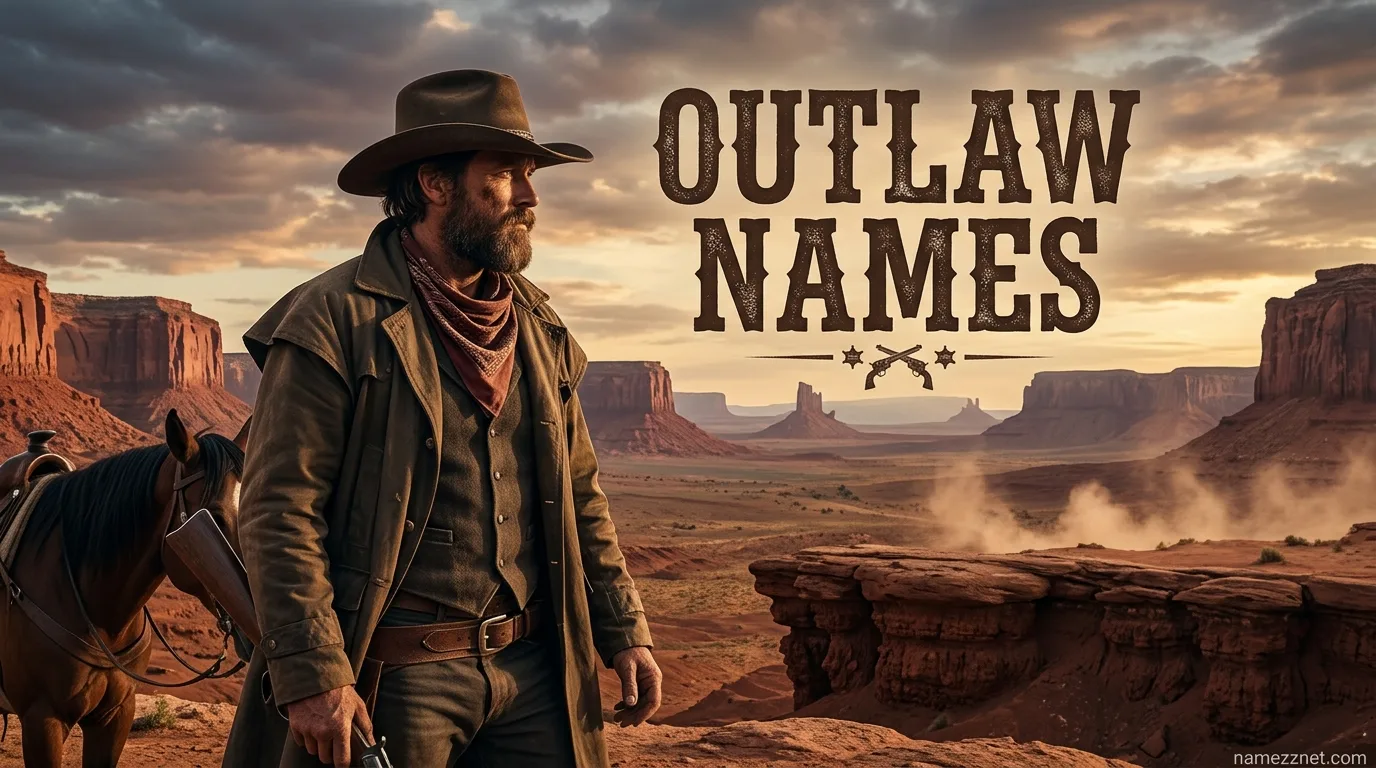
Outlaw Names have a strange, lasting power in storytelling, gaming, branding, and even baby naming inspiration. The word outlaw itself brings images of dusty frontier towns, fearless rebels, and characters who live outside society’s rules. But beyond movies and legends, outlaw-inspired names have become a modern way to express boldness, independence, and individuality.
Whether you’re naming a game character, writing a novel, creating a brand identity, or just exploring edgy name ideas, outlaw names carry a sense of mystery and rebellion that instantly stands out. In a world full of predictable choices, these names break the pattern—and that’s exactly why people search for them.
In this guide, we’ll explore the meaning of outlaw names, their historical roots, cultural influence, categories, real and fictional inspirations, naming strategies, and expert tips. You’ll also discover how to create your own outlaw-style names that feel powerful, authentic, and memorable.
What Are Outlaw Names? (Meaning and Concept)
Outlaw names are names associated with rebellion, independence, and nonconformity. They often come from:
- Historical criminals or folk heroes
- Western gunfighters and cowboys
- Pirates, bandits, and rebels
- Fictional antiheroes
- Modern pop culture “bad boy” or “bad girl” characters
At their core, outlaw names represent people who live outside rules—either literally (like criminals in history) or symbolically (like fictional rebels who challenge authority).
The appeal isn’t about crime—it’s about freedom, defiance, and identity.
The Cultural Significance of Outlaw Names
Outlaw names are deeply tied to cultural storytelling. Across history, societies have been fascinated by figures who break rules yet become legends.
Why we remember outlaws more than ordinary figures
- They challenge authority
- They live dangerously and unpredictably
- They become symbols of resistance or justice
- They are often romanticized in folklore and media
For example, American Old West legends like Jesse James and Billy the Kid became larger-than-life figures because stories about them blended truth and myth.
Even when their actions were controversial, their names became symbols of rebellion and freedom.
Categories of Outlaw Names
Outlaw names aren’t just one style—they come in different categories depending on tone, origin, and use. Let’s break them down.
1. Historical Outlaw Names
These are real people from history known for rebellion, crime, or resistance.
Examples and meanings:
- Butch Cassidy
A charismatic train robber who became a folk hero of the Wild West. - Sundance Kid
Known for loyalty, precision, and partnership with Butch Cassidy. - John Dillinger
Famous bank robber during the Great Depression, symbolizing defiance against authority. - Al Capone
One of the most notorious crime bosses in American history, representing power and control outside the law.
These names often feel cinematic and strong, making them popular for characters and aliases.
2. Western Cowboy Outlaw Names
The Wild West created some of the most iconic outlaw names in history.
- “Black Jack” – a nickname style suggesting danger and mystery
- “Wyatt” – associated with gunfighters and lawmen alike
- “Doc” – often used for skilled but morally ambiguous characters
- “Ranger” – evokes authority mixed with rugged independence
These names work well in storytelling because they feel raw, rugged, and timeless.
3. Female Outlaw Names
Female outlaw names are often linked with rebellion, independence, and strength.
- “Calamity Jane” – a frontier woman known for bold behavior and fearless attitude
- “Belle Starr” – a famous outlaw queen symbolizing elegance and crime combined
- “Annie Oakley” – a sharpshooter who became a Wild West legend
These names represent women who defied expectations and lived on their own terms.
4. Fictional Outlaw Names
Pop culture has given us some of the most iconic outlaw-style names.
- Han Solo
A smuggler with a heart of gold, symbolizing charm and independence. - The Joker
A chaotic antihero representing unpredictability and rebellion. - “Mad Max” – survivalist outlaw in a dystopian world
- “Deadshot” – precision and danger in modern antihero storytelling
Fictional outlaws are especially popular because they blend danger with charisma.
5. Pirate and Maritime Outlaw Names
Pirates are classic outlaws of the sea.
- “Blackbeard” – fearsome and intimidating pirate identity
- “Anne Bonny” – one of history’s most famous female pirates
- “Calico Jack” – colorful and unpredictable pirate captain
These names often evoke freedom, adventure, and chaos on the open sea.
How Outlaw Names Influence Modern Naming Trends
Outlaw-style naming isn’t limited to history or fiction—it has evolved into modern culture.
Common modern uses:
- Gaming usernames (e.g., “ShadowBandit”, “RogueFang”)
- Fantasy novels and character creation
- Music stage names (rap, rock, and hip-hop artists)
- Brand naming for edgy startups or fashion labels
- Social media handles
The goal is always the same: stand out and project identity.
Psychological Appeal of Outlaw Names
Why do people love outlaw names so much?
1. Rebellion and Freedom
They symbolize breaking free from rules and expectations.
2. Identity Reinvention
People use them to create alter egos or stronger online identities.
3. Power and Mystery
Outlaw names often sound dangerous or unknown, which creates intrigue.
4. Storytelling Potential
A strong name suggests a backstory even before details are revealed.
How to Create Your Own Outlaw Names (Expert Guide)
You don’t need history books to create powerful outlaw names. You just need structure and imagination.
Step 1 – Choose a Core Tone
Decide the personality:
- Dangerous (e.g., “Viper”, “Rage”, “Blade”)
- Mysterious (e.g., “Shade”, “Ghost”, “Wraith”)
- Western (e.g., “Rust”, “Dust”, “Canyon”)
- Chaotic (e.g., “Storm”, “Riot”, “Chaos”)
Step 2 – Add a Title or Identity Marker
Outlaw names often include titles:
- “The Kid”
- “The Outlaw”
- “The Phantom”
- “The Rider”
Example: Ghost Rider style naming works because it blends identity + action.
Step 3 – Mix Real Names with Nicknames
You can combine normal names with outlaw energy:
- Jack “Rebel” Morgan
- Luke “Blackout” Hayes
- Maya “Viper” Stone
This technique makes names feel realistic yet cinematic.
Step 4 – Use Nature and Danger Symbols
Outlaws are often tied to natural forces:
- Fire (Blaze, Ember)
- Storms (Thunder, Tempest)
- Animals (Wolf, Raven, Cobra)
Example: “Raven Storm” feels dark, intelligent, and unpredictable.
Common Mistakes When Choosing Outlaw Names
Even powerful naming ideas can fail if done poorly.
1. Overcomplicating the name
Too many words reduce impact.
2. Using random edgy words
“Dark Killer Shadow Assassin 999” lacks identity.
3. Ignoring pronunciation
If it’s hard to say, it’s hard to remember.
4. Copying famous names directly
Instead of copying, reinterpret themes.
5. Losing consistency with personality
A playful character shouldn’t have an overly violent name unless intentional.
Popular Themes in Outlaw Names
Outlaw naming trends often revolve around:
- Western frontier legends
- Crime and mafia culture
- Dark fantasy and antiheroes
- Cyberpunk rebels
- Post-apocalyptic survivors
These themes help shape emotional tone and storytelling depth.
Outlaw Names in Pop Culture
Modern media continues to expand outlaw identity:
- Western films and series (gunslingers and sheriffs)
- Crime dramas (mob bosses and gang leaders)
- Superhero universes (antiheroes and vigilantes)
- Video games (rogues, assassins, mercenaries)
Outlaw characters remain popular because they blur the line between good and bad.
FAQ: Outlaw Names
What are outlaw names used for?
Outlaw names are commonly used for characters, gaming identities, storytelling, branding, and creative writing.
Are outlaw names always related to crime?
Not necessarily. They often symbolize rebellion, independence, and nonconformity rather than actual criminal activity.
What makes a good outlaw name?
A strong outlaw name is short, memorable, emotionally charged, and reflective of personality or story.
Can outlaw names be used in real life?
Yes, many people use outlaw-inspired nicknames online or in creative communities.
What is the difference between outlaw names and villain names?
Outlaw names focus on rebellion and freedom, while villain names often emphasize evil or destruction.
Conclusion: The Lasting Power of Outlaw Names
Outlaw names continue to captivate because they represent something deeply human—the desire to break boundaries, redefine identity, and live beyond limits. From legendary figures like Jesse James and Billy the Kid to fictional icons like The Joker, these names carry stories of rebellion, risk, and individuality.
Whether you’re crafting a character, building a brand, or searching for a bold identity, outlaw names give you a powerful toolkit of expression. The key is not just choosing a name—but choosing a story behind it.
In the end, the best outlaw names don’t just sound strong—they feel unforgettable.
