
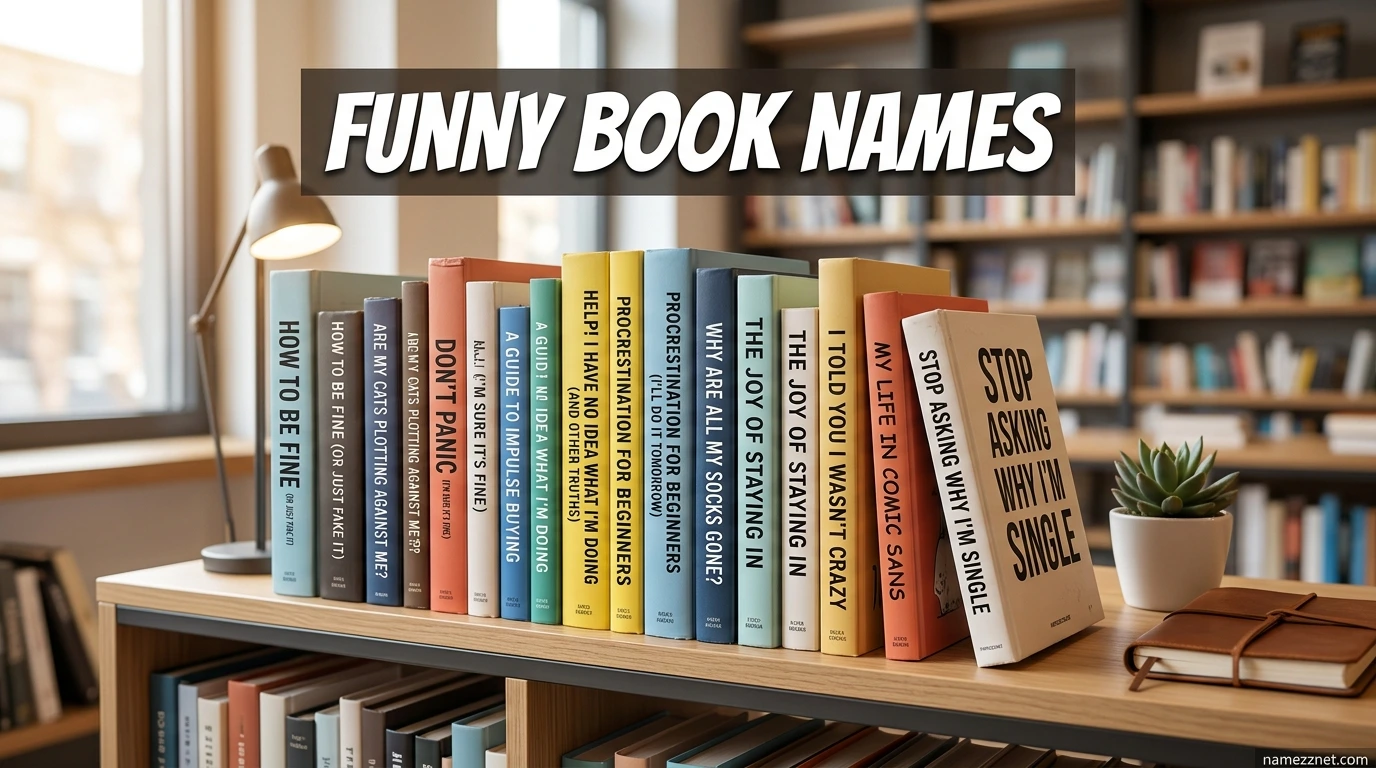
Have you ever picked up a book simply because its title made you laugh? You’re not alone. Funny book names have a unique power: they grab attention instantly, spark curiosity, and make readers eager to discover what’s inside. In a world where thousands of books compete for attention, a humorous title can be the difference between being overlooked and becoming unforgettable.
Whether you’re an author searching for the perfect title, a reader looking for amusing books, or simply someone who enjoys clever wordplay, funny book names offer a fascinating blend of creativity, marketing, and entertainment. From absurd puns and witty phrases to hilariously honest titles, these names can transform an ordinary book into a memorable cultural conversation piece.
This comprehensive guide explores everything you need to know about funny book names, including why they work, different categories, famous examples, naming techniques, common mistakes, and expert tips for creating titles that make people smile while boosting discoverability.
What Are Funny Book Names?
Funny book names are titles designed to entertain, amuse, surprise, or intrigue readers through humor. They often use:
- Puns
- Wordplay
- Double meanings
- Exaggeration
- Irony
- Unexpected contrasts
- Pop culture references
- Self-deprecating humor
A funny title serves two important purposes:
- It grabs attention.
- It communicates the book’s personality.
For many readers, the title creates the first impression before they read a single page.
Why Readers Love Funny Book Titles
Humor triggers positive emotions. When people laugh, they naturally become more interested and engaged.
A funny title can:
- Increase memorability
- Encourage social sharing
- Improve word-of-mouth marketing
- Create curiosity
- Make a book stand out in crowded marketplaces
In the age of social media, a clever title can even become viral content.
Why Funny Book Names Matter More Than Ever
The publishing industry is more competitive than ever.
Millions of books are available through digital and traditional publishing platforms. Readers often make decisions in seconds.
A humorous title can:
Create Instant Curiosity
Titles like “How to Survive Your Family Reunion Without Going to Jail” immediately make readers wonder what’s inside.
Encourage Sharing
People love sharing things that make them laugh.
Funny titles frequently appear in:
- Instagram posts
- TikTok videos
- Reddit discussions
- Facebook groups
- Book recommendation lists
Build a Brand
Authors known for humor often use funny titles as part of their identity.
A memorable title becomes a marketing asset that lasts for years.
The Psychology Behind Funny Book Names
Understanding why funny titles work can help authors create better ones.
Humor Creates Emotional Connection
People remember emotions more than information.
A title that makes someone smile immediately establishes a positive relationship.
Surprise Captures Attention
Unexpected combinations often trigger humor.
Examples:
- Zombies and accounting
- Cats and world domination
- Grandmas and espionage
The brain naturally notices unusual pairings.
Laughter Reduces Resistance
Humorous titles feel approachable.
Readers may feel less intimidated by a funny title than by a serious or academic one.
Popular Categories of Funny Book Names
Not all humorous titles use the same style. Understanding different categories can inspire more creative ideas.
Pun-Based Funny Book Names
Puns remain one of the most popular forms of title humor.
Examples:
“Lord of the Fries”
A playful twist on a famous fantasy title. Great for food-related content.
“Gone with the Gin”
Combines a classic literary reference with cocktail humor.
“The Codfather”
A seafood-themed parody that instantly creates amusement.
Why they work:
- Familiar references
- Clever word substitutions
- Easy memorability
Absurd and Ridiculous Titles
Some books embrace complete absurdity.
Examples:
“How to Avoid Huge Ships”
The title sounds unexpectedly specific, making it unintentionally hilarious.
“Everyone Poops”
Simple, honest, and universally relatable.
“The Day My Butt Went Psycho”
Over-the-top absurdity appeals particularly to younger readers.
Why they work:
- Unexpected topics
- Extreme situations
- Childlike humor
Self-Deprecating Titles
These titles poke fun at the author or audience.
Examples:
“I’m Fine… And Other Lies”
Relatable humor about everyday struggles.
“Reasons My Kid Is Crying”
Parents instantly understand the joke.
“Adulting Is Hard”
A modern phrase reflecting shared experiences.
Why they work:
- Relatability
- Authenticity
- Social media appeal
Satirical Titles
Satire uses humor to critique society.
Examples:
“How to Talk to Your Cat About Gun Safety”
An absurd premise used to explore larger issues.
“The Field Guide to Dumb Birds of North America”
A humorous twist on traditional nature guides.
Why they work:
- Clever social commentary
- Unexpected perspectives
- Intellectual humor
Pop-Culture Inspired Titles
Modern audiences enjoy references to movies, TV shows, games, and internet culture.
Examples:
“Game of Scones”
A bakery-inspired parody.
“The Walking Bread”
A humorous food-based twist on a famous franchise.
“Fifty Shades of Gravy”
Combines recognizable references with culinary comedy.
Why they work:
- Instant recognition
- Familiarity
- Shareability
Famous Funny Book Names That Became Bestsellers
Many successful books owe part of their popularity to memorable titles.
“Go the F*ck to Sleep”
This bedtime parody became a global sensation.
Reasons for success:
- Shock value
- Parent relatability
- Unexpected honesty
“How Not to Die”
The title uses dark humor while discussing health and longevity.
Reasons for success:
- Curiosity
- Contradiction
- Strong emotional response
“The Subtle Art of Not Giving a F*ck”
A modern self-help phenomenon.
Reasons for success:
- Rebellious tone
- Memorable phrasing
- Distinct branding
These examples show how humor can drive massive commercial success.
How Authors Create Funny Book Names
Creating a humorous title requires more strategy than many people realize.
Start With the Core Concept
Ask:
- What is the book about?
- What emotions should readers feel?
- What makes the topic unique?
The funniest titles often emerge naturally from the subject matter.
Use Unexpected Combinations
Combine unrelated concepts.
Examples:
- Vampires + Cooking
- Pirates + Tax Preparation
- Aliens + Gardening
The contrast creates humor.
Explore Double Meanings
Words with multiple interpretations can generate clever titles.
Example:
“Booked for Trouble”
Could refer to books or legal issues.
Test Reader Reactions
If people smile immediately, you’re on the right track.
If they need an explanation, the humor may be too complicated.
100 Funny Book Name Ideas With Meanings
Funny Fiction Book Names
1. The Accidental Villain
Perfect for a protagonist who keeps making bad decisions.
2. My Dragon Ate My Homework
Combines fantasy and everyday problems.
3. The Last Unicorn Accountant
Absurd contrast between magic and office life.
4. Ninja Grandma Strikes Again
Unexpected hero creates instant humor.
5. Murder at the Cat Café
Blends mystery and pet culture.
6. Apocalypse for Beginners
A funny survival-themed title.
7. Zombies Need Therapy Too
Humanizes monsters in a humorous way.
8. The Haunted Sandwich
Ridiculous and memorable.
9. My Neighbor Is Probably an Alien
Creates curiosity and comedy.
10. Revenge of the Garden Gnomes
Playful suburban chaos.
Funny Nonfiction Book Names
11. How to Look Busy at Work
Relatable workplace humor.
12. Professional Procrastination
A clever contradiction.
13. Surviving Mondays
Universal appeal.
14. Why My Diet Hates Me
Self-deprecating humor.
15. The Art of Losing Keys
Everyday frustration made funny.
16. Sleeping Through Success
An ironic self-help title.
17. Parenting Without Instructions
Honest and relatable.
18. The Lazy Person’s Guide to Productivity
Humorous contradiction.
19. Internet Arguments for Beginners
Modern social commentary.
20. How to Confuse Everyone
Playfully mischievous.
Funny Fantasy Book Names
21. Wizard Problems
22. Dragons Hate Mondays
23. The Goblin Tax Collector
24. Magic Gone Wrong
25. Questing for Snacks
26. Sword Fighting and Other Mistakes
27. The Lazy Necromancer
28. A Troll in Human Resources
29. Potion Explosion
30. Unicorns Need Coffee Too
Each title combines fantasy tropes with modern humor.
Funny Romance Book Names
31. Love at First Swipe
32. My Ex Is a Supervillain
33. Kissing Under Construction
34. Dating Disasters Anonymous
35. Cupid Needs Glasses
36. Romance Is Expensive
37. The Wedding Wasn’t Mine
38. Falling for the Wrong Twin
39. Love and Other Poor Decisions
40. Texting My Way to Trouble
These titles highlight relatable relationship mishaps.
Funny Book Names for Children’s Books
Children love titles that sound silly, weird, and imaginative.
Popular Themes
Animals Doing Human Things
Examples:
- The Penguin Who Hated Ice
- Detective Hamster
- The Chicken Who Wanted Wi-Fi
These titles appeal to children’s imagination.
Gross-Out Humor
Examples:
- The Day My Socks Attacked Me
- Captain Booger
- The Revenge of the Giant Burp
Kids often find harmless gross humor irresistible.
Silly Adventures
Examples:
- Grandma Rode a Dinosaur
- My Teacher Is a Pirate
- The Invisible Pickle
Unexpected situations create instant appeal.
Funny Book Names Inspired by Modern Trends
Today’s audiences respond strongly to internet culture and current lifestyles.
Social Media Humor
Examples:
- Influencing My Cat
- Viral by Accident
- Hashtag Disaster
Work-From-Home Humor
Examples:
- My Boss Thinks I’m Online
- Zoom Hair Don’t Care
- Working Hardly Working
Artificial Intelligence Humor
Examples:
- My Robot Needs Therapy
- AI Stole My Homework
- Chatbots and Chaos
These concepts resonate with contemporary readers.
Expert Tips for Choosing the Perfect Funny Book Name
Make It Easy to Remember
The best titles are simple enough to repeat after hearing them once.
Match the Book’s Tone
A funny title should accurately reflect the content.
Avoid misleading readers.
Keep It Search-Friendly
Include relevant keywords when possible.
For example:
- Funny parenting book
- Humorous fantasy novel
- Comedy self-help guide
Say It Out Loud
Many titles sound different when spoken.
Reading aloud helps identify awkward phrasing.
Check Originality
Research existing titles before publishing.
Unique names help avoid confusion and improve discoverability.
Common Mistakes When Creating Funny Book Names
Trying Too Hard
Forced humor often feels awkward.
Natural humor tends to work better.
Making Titles Too Long
Extremely lengthy titles may be difficult to remember.
Using Obscure References
Not everyone understands niche jokes.
Aim for broad accessibility.
Ignoring Your Audience
Different readers appreciate different types of humor.
Children, young adults, and business readers have different expectations.
Sacrificing Clarity
Readers should still understand the book’s topic.
Humor should enhance communication, not replace it.
How Funny Book Names Help Marketing
A strong title acts as a marketing tool long before readers see advertisements.
Benefits include:
Better Click-Through Rates
People are more likely to click intriguing titles.
Increased Social Sharing
Funny content naturally spreads online.
Stronger Brand Recognition
Readers remember unusual titles.
Higher Word-of-Mouth Potential
People enjoy recommending books with amusing names.
A memorable title often becomes part of the book’s success story.
Funny Book Names Across Different Genres
Mystery
- Death by Cupcake
- The Curious Case of the Missing Pants
- Murder Most Awkward
Science Fiction
- Alien Customer Service
- Mars Needs Coffee
- Galactic Technical Support
Horror Comedy
- Ghosts Hate Loud Neighbors
- The Zombie Next Door
- Haunted but Hopeful
Self-Help
- Fix Your Life Eventually
- Confidence for Introverts
- Stop Overthinking Everything
Genre-specific humor helps attract the right audience.
Frequently Asked Questions About Funny Book Names
What makes a book title funny?
A funny title typically uses humor techniques such as puns, irony, exaggeration, absurdity, unexpected combinations, or relatable experiences that create amusement and curiosity.
Do funny book names help sell books?
Yes. A memorable and humorous title can increase visibility, encourage social sharing, improve click-through rates, and generate word-of-mouth recommendations.
Can serious books have funny titles?
Absolutely. Many self-help, business, and educational books use humor in their titles to appear more approachable and engaging.
Should children’s books have funny titles?
Funny titles often work exceptionally well for children because they spark curiosity and encourage reading through playfulness and imagination.
How long should a funny book title be?
Most successful titles are concise and easy to remember. Short to medium-length titles generally perform best.
Are puns the best type of funny book title?
Puns are popular, but they’re not the only option. Absurdity, satire, irony, and relatable humor can be equally effective depending on the audience.
Can funny titles hurt credibility?
Only if they don’t match the content. When aligned with the book’s purpose and audience, humorous titles often enhance appeal rather than diminish credibility.
How do I know if my title is funny?
Test it with potential readers. If multiple people smile, laugh, or remember it later, that’s a strong indicator that the humor works.
Conclusion
Funny book names are far more than clever jokes—they are powerful tools for attracting attention, building curiosity, strengthening branding, and creating memorable reader experiences. Whether through witty puns, absurd scenarios, relatable struggles, satire, or pop-culture references, the best humorous titles immediately communicate personality and invite readers to explore further.
The most successful funny book names balance humor with clarity. They entertain while still revealing something about the book’s content. By understanding the psychology of humor, studying successful examples, avoiding common mistakes, and applying proven naming techniques, authors can create titles that stand out in crowded marketplaces and remain memorable long after readers see them.
Whether you’re naming a novel, children’s book, memoir, fantasy adventure, romance, or self-help guide, a well-crafted funny title can transform first impressions into lasting interest. And in today’s competitive publishing world, that smile-inducing first impression may be one of the most valuable assets your book can have.
